How Much Do Missed Calls Cost HVAC Businesses? (2026 Data)
Every HVAC owner knows the feeling. You are three hours into a no-cool call in July, your technician is running behind on the next job, and your phone rings. Nobody answers. The caller hangs up.
That call had a price tag. Most HVAC owners have no idea what it was.
This is not a post about customer service. It is about math. Specifically, it is about the gap between what your phone brings in and what it quietly loses every single month, whether business is slow or slammed.
We pulled data from Invoca, ServiceTitan, and Hatch to model the real cost of missed calls for HVAC businesses at three different sizes. The numbers are worse than most owners expect.
The baseline: how many calls does an HVAC business actually miss?
Before we get to dollars, we need a miss rate.
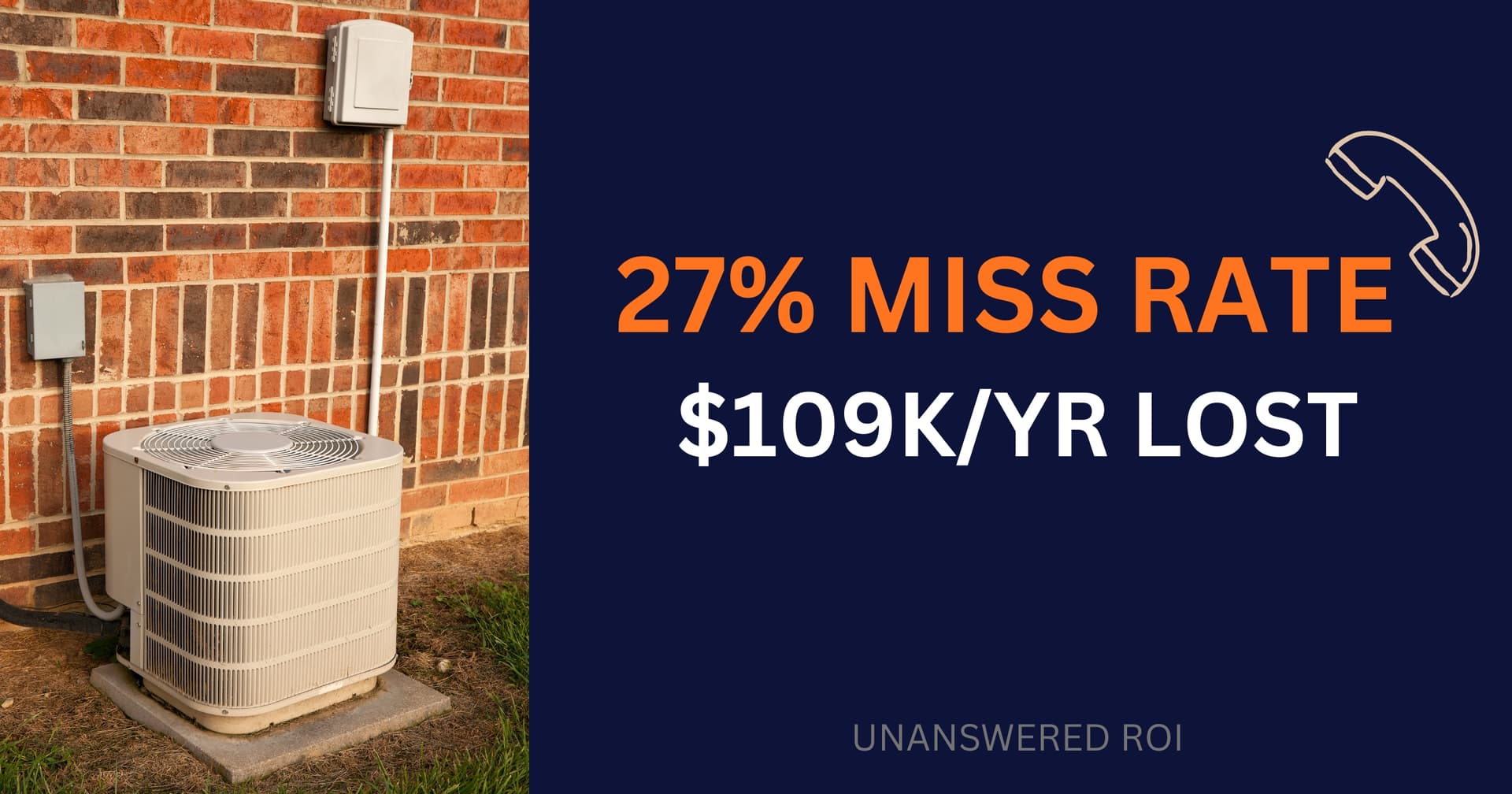
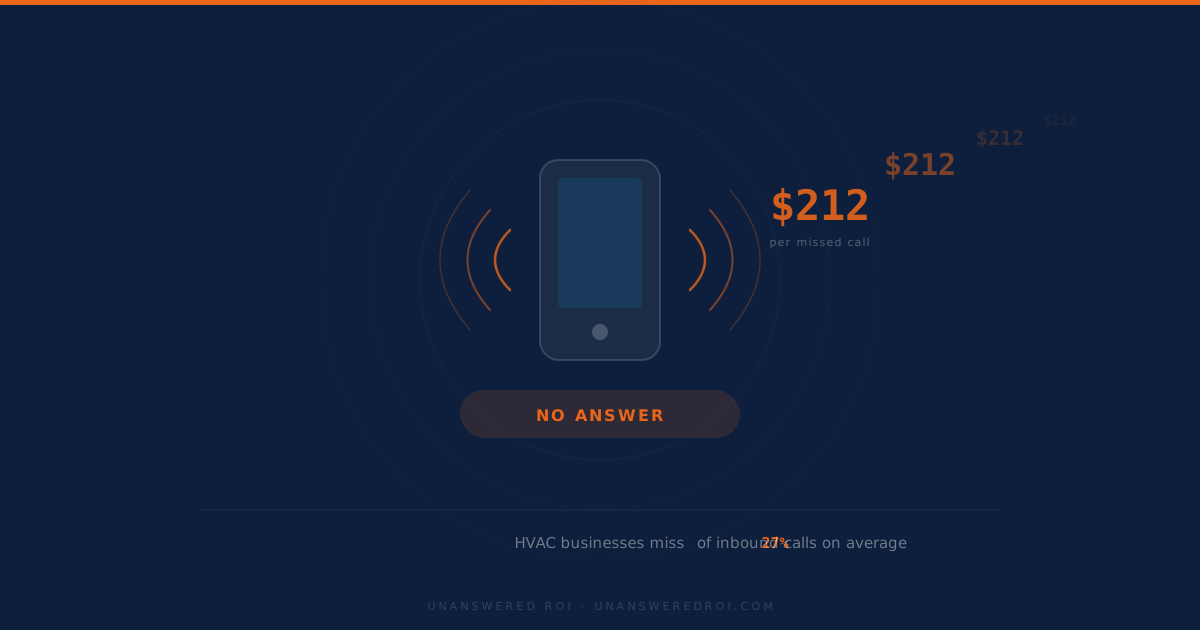
According to call tracking data from Invoca across more than 100,000 home services calls, HVAC businesses miss an average of 27% of inbound calls. That means roughly 1 in 4 calls goes unanswered.
That number is not evenly distributed across the year. During peak months, June, July, and August for cooling season, and November through January for heating, miss rates climb to 32% or higher. The same front desk that handles 80 calls a month in March at a 20% miss rate is handling 160 calls in July and missing closer to 35%.
The calls that get missed in July are not the low-value ones. They are homeowners with a broken AC unit, a house full of kids, and Google open on their phone. They are calling you first. When you do not answer, they call your competitor.
ServiceTitan's call data shows that the average HVAC close rate from an answered inbound call is 55%. Of the calls that do get answered, more than half convert to a booked job. That conversion rate drops to near zero for missed calls. Invoca's research shows that 85% of callers who do not reach a live person on the first attempt do not call back.
So the math is not "you missed a call." The math is "you permanently lost a customer."
What one missed call is actually worth
Let's build the model from the ground up.
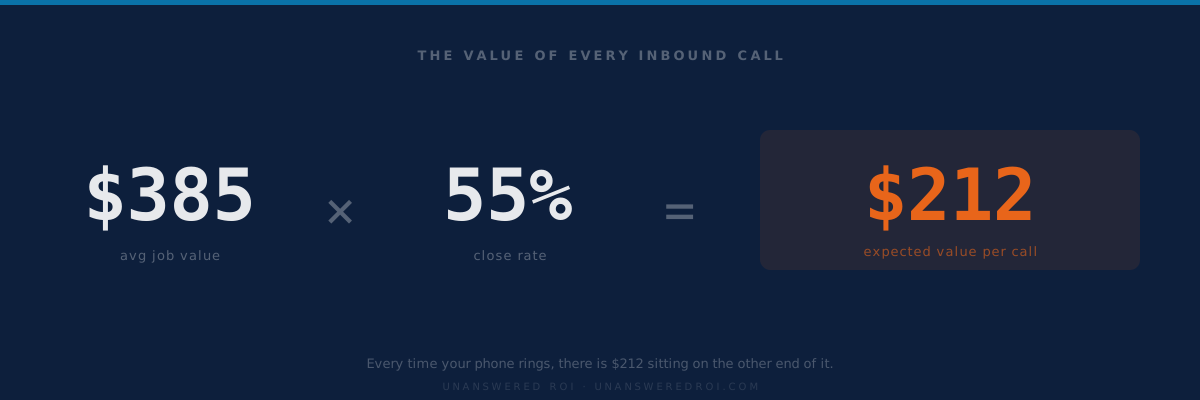
The national average HVAC job value across all service types is $385 per call, according to Hatch's 2024 Home Services Benchmark Report. That includes everything from a $95 diagnostic to a $1,200 capacitor replacement to a $4,500 system installation, averaged across the full mix of calls a typical shop receives.
At a 55% close rate, the expected value of a single inbound call before anyone picks up the phone is:
$385 x 55% = $212 per call
Every time your phone rings, there is $212 sitting on the other end of it.
When that call goes unanswered, you do not lose $212 with certainty. You lose the probability-weighted value which, given the 85% non-return rate, means you are recovering about 15 cents of every dollar that called and did not reach you.
In practical terms: each missed call costs your HVAC business approximately $180 in expected revenue.
The real cost by business size
Here is where it gets concrete. We modeled three HVAC operations based on typical call volumes reported in ServiceTitan's 2024 benchmark data.
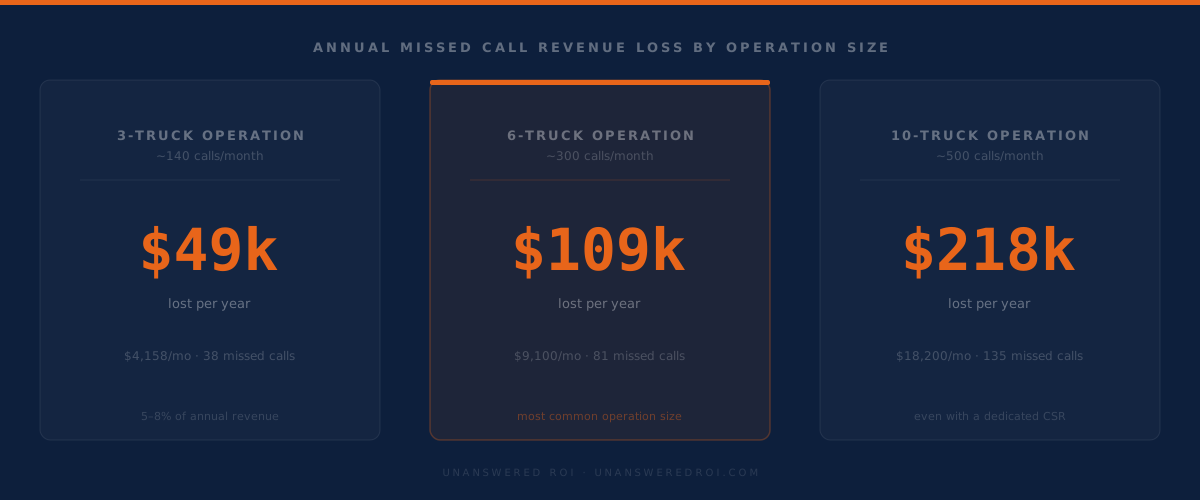
3-truck operation: $4,158 lost per month
A 3-truck HVAC shop typically handles between 120 and 150 inbound calls per month. We will use 140 as our baseline.
At a 27% miss rate, that is 38 missed calls per month.
38 missed calls x $212 expected value x 85% non-return rate = $6,851 in permanently lost revenue per month.
That is the ceiling. The floor, assuming some of those callers do eventually reach you through a callback or second attempt, sits around $4,158 per month, or roughly $49,900 per year.
For a 3-truck operation doing $600,000 to $900,000 in annual revenue, that is 5% to 8% of your top line walking out the door through your phone system.
6-truck operation: $9,100 lost per month
A 6-truck shop runs approximately 280 to 320 inbound calls per month. At 300 calls and a 27% miss rate, that is 81 missed calls.
81 x $212 x 85% = $14,591 ceiling.
Conservative floor accounting for some recovery: $9,100 per month, or $109,200 per year.
At this size, HVAC businesses are often running a dedicated dispatcher or CSR. The miss rate should be lower, but call volume is higher, and peak-season surges hit harder. A single storm event can triple inbound volume for 48 hours. One dispatcher cannot cover it.
10-truck operation: $18,200 lost per month
A 10-truck fleet takes 500 or more inbound calls per month. At 500 calls and a 27% miss rate, that is 135 missed calls.
135 x $212 x 85% = $24,327 ceiling.
Conservative floor: $18,200 per month, or $218,400 per year.
At this scale, most operators are aware of the problem but have not quantified it. The assumption is that a second CSR or an answering service "handles it." The data says otherwise. Adding a second CSR reduces miss rates to around 18%, which still represents $145,000 in annual lost revenue for a 10-truck operation.
Where the loss compounds: peak season math
The annual numbers above assume average miss rates across all 12 months. The reality is worse because peak season distorts everything.
A sinusoidal model of HVAC call volume, calibrated to ServiceTitan's monthly call distribution data, shows that the top three months of the year account for 38% of annual inbound call volume.
When volume spikes, miss rates spike with it. When miss rates spike during the months with the highest volume, the revenue impact is not additive. It is multiplicative.
For a 6-truck operation:
- Off-season (November to March): 180 calls/month, 20% miss rate, 36 missed calls, $7,650/month lost
- Peak season (June to August): 420 calls/month, 32% miss rate, 134 missed calls, $24,140/month lost
The difference between a slow February and a slammed July is not 2x. It is closer to 3x. And those are the calls you least want to miss. Homeowners calling during a heat wave are not price-shopping. They are ready to book the first person who answers.
Why HVAC businesses miss more calls than they think
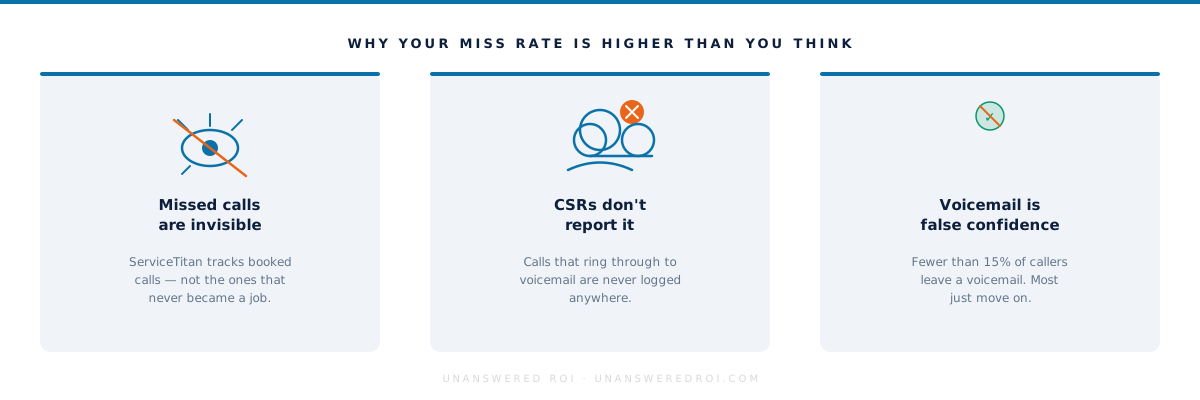
Most HVAC owners believe their miss rate is lower than it actually is. There are three reasons for this.
First, missed calls are invisible in most reporting. ServiceTitan and Housecall Pro track booked calls. They do not prominently surface the calls that never became a job. You see your booking rate. You do not see the denominator, all the calls that came in before anyone booked.
Second, CSRs do not report missed calls. If your dispatcher is on a call and another line rings through to voicemail, that missed call does not get logged anywhere. It simply disappears. Without dedicated call tracking software, you have no visibility into calls that did not convert.
Third, voicemail creates false confidence. If a caller leaves a voicemail, you feel like you captured the lead. The data says otherwise. Of callers who leave a voicemail with a service business, fewer than 30% convert to a booked job compared to 55% for live-answered calls. Voicemail is not a safety net. It is where leads go to die.
The data on caller behavior makes this even more stark. 85% of callers who don't reach a live person never call back, which means the miss rate problem compounds every single time the phone rings unanswered.
The 5-year number nobody thinks about
Here is a number that tends to change how HVAC owners think about this.
Assuming 3% year-over-year growth in call volume, consistent with US small business service sector averages from the Bureau of Labor Statistics, and holding miss rates constant, the 5-year cumulative revenue loss from missed calls is:
- 3-truck operation: $265,000
- 6-truck operation: $580,000
- 10-truck operation: $1,160,000
These are not projections of what you could earn. They are projections of what you are already losing, compounded forward.
A single service truck costs $50,000 to $80,000 fully equipped. A 3-truck shop is losing the cost of 3 to 5 trucks over 5 years through missed calls alone.
What recovery looks like in practice
You do not need to answer every missed call to materially change your revenue picture.
Recovering 30% of your missed calls, not all of them, just 30%, changes the math significantly.
For a 6-truck operation at 81 missed calls per month:
- 30% recovery = 24 additional answered calls per month
- 24 x 55% close rate = 13 additional booked jobs
- 13 x $385 average job value = $5,005 in additional monthly revenue
- Annual impact: $60,060
That is the return on whatever system you use to answer more calls, whether that is a second CSR, an answering service, or an AI receptionist.
If an answering solution costs $400 per month and recovers 30% of your missed calls, it pays for itself in the first 3 days of every month. The remaining 27 days are pure margin recovery.
Use the Unanswered ROI calculator to model your specific numbers
How to find your actual miss rate
Most HVAC businesses do not know their real miss rate. Here is how to find it.
Option 1 — Call tracking software. Tools like CallRail, Invoca, or the built-in call tracking in ServiceTitan can show you total inbound call volume versus answered calls. If you are not using one of these, you are operating blind.
Option 2 — Your phone system logs. Most VoIP systems like RingCentral, Dialpad, and Google Voice for Business log every inbound call including missed calls and voicemails. Pull your last 30 days and count.
Option 3 — The calculator. If you do not have access to your exact data, use industry benchmarks. The Unanswered ROI calculator pre-fills your miss rate and close rate from verified HVAC benchmarks. Enter your monthly call volume and average job value and it will give you your estimated monthly loss in under 30 seconds.
The bottom line
Missed calls are not a customer service problem. They are a revenue problem.
For an HVAC business running 150 calls per month at industry-average rates, the cost of missed calls is roughly $4,200 per month, before accounting for peak season surges, lifetime customer value, or referral loss.
That number does not require a consultant to fix. It requires knowing it exists.
The first step is finding your number. The second is deciding whether you are going to do something about it.
Calculate your missed call revenue loss in 30 seconds
Related reading:
All benchmarks sourced from Invoca Call Intelligence Report 2024, ServiceTitan HVAC Benchmark Report 2024, and Hatch Home Services Benchmark Report 2024. Miss rates, close rates, and average job values represent industry averages and may vary by market, geography, and business model. Full methodology and sources available at unansweredroi.com/sources.